Keep up-to-date with all the latest news, investments, recruitment drives and projects here at Amix.
Standard concrete vs reinforced concrete: What’s the difference?
Choosing the right concrete is an important part of any construction project. Different types of concrete are designed for different applications, so understanding how they perform can help you select the most suitable option.
Standard concrete and reinforced concrete are two of the most commonly used concrete types. While they may look similar once installed, they are designed to perform differently depending on the loads they need to support.
This guide explains the difference between standard concrete and reinforced concrete, when each is typically used and why selecting the correct concrete matters for long term performance.
Key takeaways
Standard concrete and reinforced concrete are designed for different applications.
Reinforced concrete uses steel reinforcement to improve performance where additional structural support is required.
Choosing the correct concrete should always be based on the project requirements and approved design.
What is standard concrete?
Standard concrete is a ready mix concrete made using cement, aggregates and water. It is widely used across domestic and commercial construction for applications where steel reinforcement is not required.
At AMIX, every load is individually batched at the plant to help provide the required strength and consistency for the specified application.
Standard concrete is commonly used for:
Paths
Patios
Shed bases
Foundations where specified
Garden projects
General construction work
The concrete supplied should always match the specification for the project and its intended application.
What is reinforced concrete?
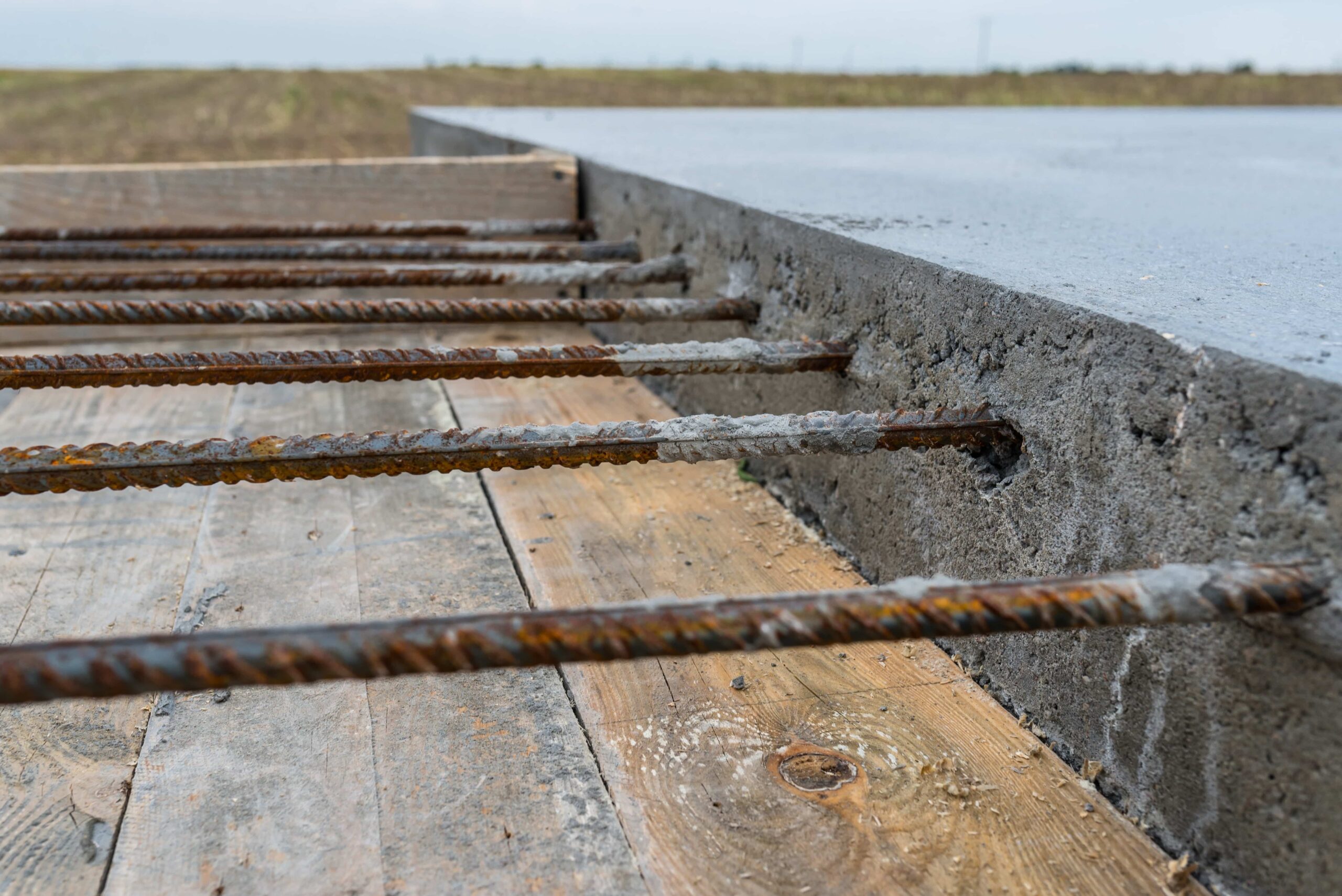
Reinforced concrete combines concrete with steel reinforcement to improve its structural performance.
Steel reinforcement is positioned within the concrete before it is poured. The concrete provides compressive strength, while the reinforcement helps resist tensile forces, allowing the two materials to work together.
Reinforced concrete is commonly used for:
Structural foundations
Footings
Retaining walls
Floor slabs
Commercial construction projects
The amount and type of reinforcement should always follow the approved design for the project.
Standard concrete vs reinforced concrete
Although both products use concrete as the main construction material, there are several important differences.
Standard concrete
Reinforced concrete
Does not contain steel reinforcement
Contains steel reinforcement
Suitable for many general construction projects
Used where additional structural support is required
Simpler installation where reinforcement is not needed
Reinforcement is installed before the concrete is poured
Used where specified by the project design
Used where structural requirements determine reinforcement is needed
The correct choice depends on the structural requirements of the project rather than one type of concrete being better than the other.
Why reinforcement is used
Concrete performs extremely well under compression, making it suitable for a wide range of construction applications.
Where additional resistance to tensile forces is required, steel reinforcement is added to the concrete. This allows reinforced concrete to perform effectively in structural applications where concrete alone may not be suitable.
The reinforcement required for any project should always be specified by the structural design.
When is standard concrete suitable?
Standard concrete is commonly used for projects that do not require structural reinforcement.
Typical applications include:
Garden paths
Patios
Driveways where appropriate
Shed bases
General groundwork
Domestic construction projects
Using the appropriate standard concrete helps ensure the finished project meets the intended specification.
When should reinforced concrete be used?
Reinforced concrete is used where additional structural support is required.
Typical applications include:
Foundations
Footings
Retaining walls
Floor slabs
Commercial construction
Where reinforcement has been specified, it should always be installed before the concrete is placed.
Instead of using steel reinforcement within the structure, this type of concrete contains fibres that are mixed throughout the concrete during production. Depending on the specification, fibres can help reduce plastic shrinkage cracking and may reduce the need for some secondary reinforcement in certain applications.
However, fibre reinforced concrete should not be regarded as a direct replacement for steel reinforcement where structural reinforcement has been specified.
The appropriate concrete should always be selected according to the approved design and project requirements.
Why ready mix concrete matters
Whether a project uses standard concrete or reinforced concrete, consistency is an important part of achieving the required performance.
At AMIX, every load is individually batched at the plant to help provide the required strength and consistency for the specified application. This helps ensure concrete arrives ready for placement and suitable for the intended use.
Discussing your project before ordering also helps ensure the concrete supplied matches your project requirements.
Choosing the right concrete
Selecting the right concrete starts with understanding how the finished structure will be used.
Factors that may influence the choice include:
Structural loading
Ground conditions
Building design
Exposure conditions
Project specification
The concrete type should always match the structural design and any project specification.
If reinforcement has been specified, it should always be installed before the concrete is poured.
Speak to the AMIX team
AMIX has supplied ready mix concrete across the North West since 1993.
Whether your project requires standard concrete, reinforced concrete or fibre reinforced concrete, our team can discuss your project requirements, help ensure the appropriate concrete is supplied and arrange delivery to suit your programme.
Frequently asked questions
What is the difference between standard concrete and reinforced concrete?
Standard concrete does not contain steel reinforcement, while reinforced concrete includes steel reinforcement to improve structural performance where required.
Is reinforced concrete stronger than standard concrete?
Reinforced concrete is designed for applications where additional resistance to tensile forces is required. The most suitable option depends on the approved design and the intended use of the structure.
When should reinforced concrete be used?
Reinforced concrete is commonly used for foundations, footings, retaining walls, floor slabs and other applications where reinforcement has been specified as part of the project design.
Can standard concrete be used for foundations?
Yes, it can be suitable for some foundation applications where specified. The concrete supplied should always match the approved design and project requirements.
Is fibre reinforced concrete the same as reinforced concrete?
No. Fibre reinforced concrete contains fibres mixed throughout the concrete, while reinforced concrete uses steel reinforcement installed before the concrete is poured. They perform different roles and are not interchangeable where structural reinforcement has been specified.
Can AMIX supply different concrete types?
Yes. AMIX supplies a range of ready mix concrete for domestic and commercial projects, including standard concrete, reinforced concrete and fibre reinforced concrete for suitable applications.