
What is the water-cement ratio in concrete and why does it matter?
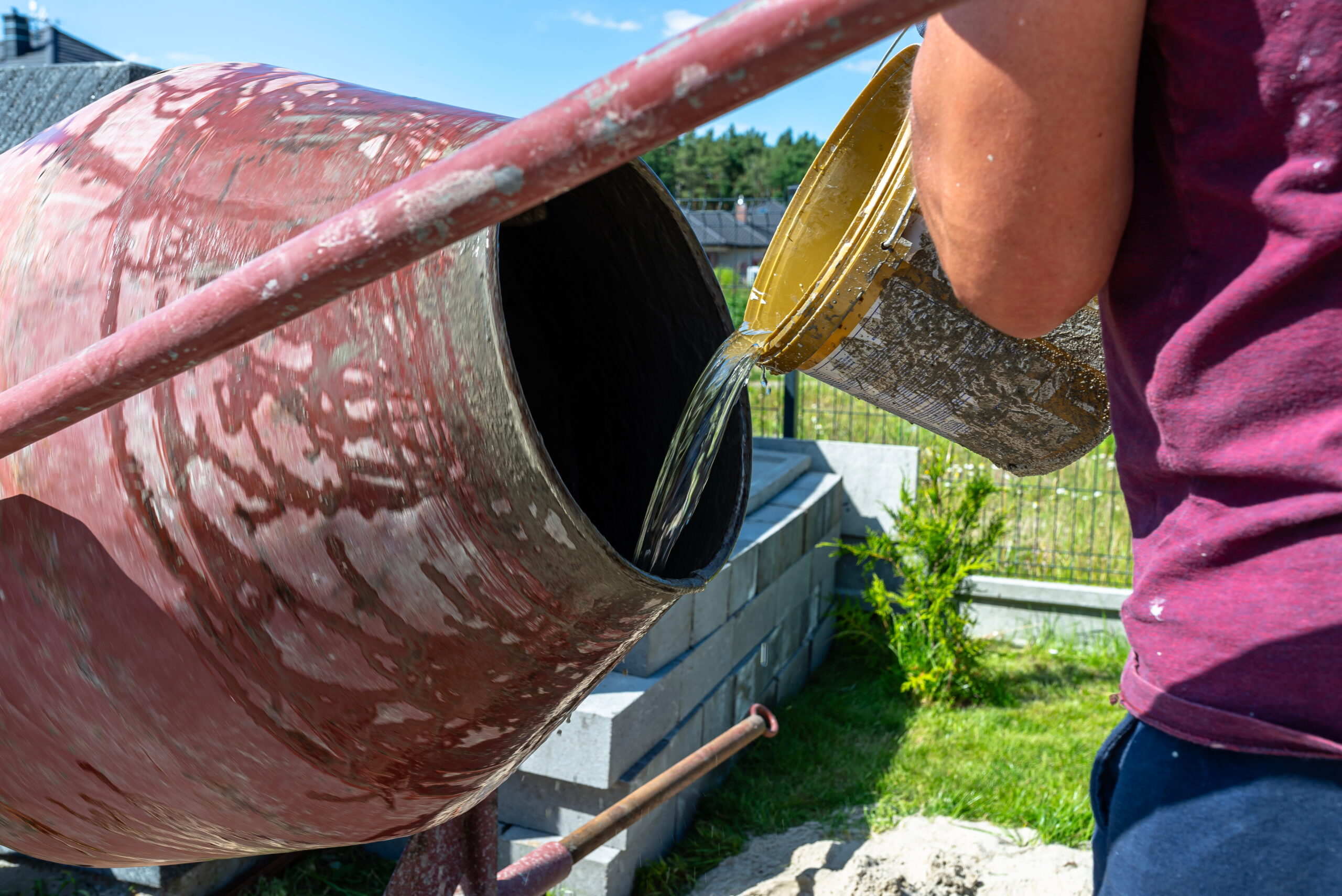
Water is essential when making concrete, but the amount used needs to be carefully controlled. Adding too much or too little can change how fresh concrete behaves and how the finished concrete performs.
The water-cement ratio describes the relationship between the amount of water and cementitious material in a concrete mix. It is an important part of concrete mix design because it can influence strength, durability and workability.
This does not mean there is one ideal water-cement ratio for every project. Concrete should be produced to the specification required for its intended application.
Here, we explain what the water-cement ratio means, why it matters and why simply adding extra water to concrete on site can cause problems.
Key takeaways
- The water-cement ratio describes the amount of water in a concrete mix relative to its cementitious content.
- Water content can influence concrete workability, strength and durability, so it needs to be properly controlled.
- Extra water should not simply be added on site to make concrete easier to place, as this can alter the properties of the specified mix.
What is the water-cement ratio?
The water-cement ratio is the relationship between the mass of water and the mass of cementitious material used in a concrete mix.
For example, a water-cement ratio of 0.5 means there is 0.5 kg of water for every 1 kg of cementitious material.
The ratio is important because water performs more than one role in fresh concrete. It is required for the chemical reactions involved in cement hydration, while also helping provide the workability required to mix, place and compact the concrete.
However, adding more water than necessary can alter the characteristics of both the fresh and hardened concrete.
Why does the water-cement ratio matter?
The water-cement ratio is one of several factors that influence how concrete performs.
Changing the amount of water relative to the cementitious content can affect:
- Workability
- Strength
- Durability
- Shrinkage
- Permeability
- Finishing characteristics
These properties are also influenced by other aspects of the mix and by how the concrete is placed, compacted and cured.
This is why concrete mix design involves controlling the proportions of all the constituent materials rather than considering water in isolation.
AMIX supplies ready mix concrete batched to order, allowing the required materials to be measured under controlled conditions before the concrete is delivered to site.
How does water affect concrete strength?
Water is necessary for cement hydration, which allows concrete to develop strength as it cures.
However, more water does not mean stronger concrete.
When excess water is incorporated into a concrete mix, it can leave additional pore space as the concrete hardens and the surplus water leaves the material. This can result in a more porous concrete and can reduce its potential strength and durability.
For this reason, water content needs to be controlled according to the concrete mix design.
The concrete must still have sufficient workability to be placed and compacted effectively, so achieving the required balance is important.
Does less water always make stronger concrete?
No.
Although reducing the water-cement ratio can contribute to higher potential strength when the concrete is properly designed, placed, compacted and cured, simply using as little water as possible is not an appropriate approach.
Concrete that is too stiff for the intended placement method may be difficult to place and compact effectively. Poor compaction can leave voids and prevent the finished concrete from performing as intended.
The required water content therefore forms part of the overall mix design.
The objective is to produce concrete that meets the required specification while providing suitable fresh properties for placement.
What happens if there is too much water in concrete?
Excess water can alter the properties of a concrete mix.
Depending on the mix and circumstances, too much water can contribute to:
- Reduced potential strength
- Increased porosity
- Greater drying shrinkage
- Increased risk of cracking
- Reduced durability
- Changes to surface quality
This is why adding water should not be treated as a simple way to make concrete easier to work with.
If a project requires particular workability, that requirement should be considered when the concrete is specified and ordered.
Why shouldn't you just add water to concrete on site?
Fresh concrete can become less workable as time passes, particularly in warmer conditions. This can make adding water on site appear to be a quick solution.
However, uncontrolled addition of water changes the proportions of the concrete that was originally batched.
This can affect the water-cement ratio and may mean the concrete no longer has the properties intended by its mix design.
Instead, the required workability and placement conditions should be considered before delivery.
Site access, formwork, labour and equipment should also be ready so the concrete can be placed promptly once it arrives.
Water-cement ratio and concrete workability
Workability describes how easily fresh concrete can be handled, placed, compacted and finished.
Increasing water can make a conventional concrete mix appear more workable, but this is not the only way workability can be controlled.
Modern concrete mixes can incorporate suitable admixtures to modify fresh concrete properties while maintaining the required mix design.
AMIX states that a full range of fibres and admixtures is available on request.
The appropriate approach depends on the required concrete specification and application, which is why workability requirements should be discussed when ordering rather than altered informally once the concrete reaches site.
What is a good water-cement ratio for concrete?
There is no single water-cement ratio that is correct for every concrete application.
The appropriate ratio forms part of the mix design and depends on the performance requirements of the concrete.
Factors that can influence the specification include:
- Required strength
- Exposure conditions
- Durability requirements
- Intended application
- Required workability
- Placement method
- Other materials and admixtures within the mix
For specified construction work, the concrete should meet the project requirements rather than using a generic water-cement ratio taken from another application.
Does standard concrete have a fixed water-cement ratio?
Not every standard concrete application uses one universal water-cement ratio.
AMIX supplies standard concrete mixed to order for general construction applications, including foundations, slabs, footings, garage bases and other domestic and light commercial work.
Different projects can require different concrete specifications depending on their loads, ground conditions, exposure and design.
The concrete supplied should therefore be appropriate for its intended application.
Where a particular mix or performance requirement has been specified by an engineer or other suitably qualified professional, that specification should be provided when ordering.
How is the water-cement ratio controlled in ready mix concrete?
Ready mix concrete is produced at a batching facility, where the constituent materials can be measured in controlled proportions.
AMIX describes ready mixed concrete as a blend of cementitious material, fine and coarse aggregate, water and additives where required.
The company supplies concrete batched to order and delivered ready for use.
Controlled batching helps maintain the intended proportions of the mix rather than relying on repeated manual measurement and mixing on site.
This is particularly useful when a project requires multiple loads of concrete to the same specification.
How do admixtures affect concrete?
Admixtures are ingredients added to concrete to modify particular characteristics of the fresh or hardened material.
Different admixtures can be used for different purposes. Depending on the product and mix design, these can include changing workability, setting behaviour or other performance characteristics.
This means additional workability does not always have to be achieved by simply increasing the amount of water.
AMIX confirms that admixtures are available on request alongside its range of concrete mixes.
Any admixture should be appropriate for the required mix and application rather than being treated as a general-purpose addition.
Is water-cement ratio the only thing that determines concrete strength?
No.
The water-cement ratio is important, but the performance of concrete depends on much more than a single ratio.
Factors can include:
- Concrete mix specification
- Cementitious materials
- Aggregate characteristics
- Admixtures
- Batching
- Placement
- Compaction
- Curing
- Environmental conditions
Even correctly specified concrete can be compromised by poor site practices.
The correct mix therefore needs to be combined with suitable preparation, placement and curing to achieve the intended result.
Why curing matters after concrete is placed
Controlling water does not stop once concrete has been batched.
After placement, concrete needs appropriate curing conditions so hydration can continue and the material can develop its intended properties.
Allowing the surface to lose moisture too quickly can affect concrete development and increase the risk of shrinkage-related problems.
Weather conditions can influence how quickly moisture is lost, particularly during hot, dry or windy conditions.
The contractor responsible for the pour should therefore have an appropriate curing plan in place before concrete is delivered.
Water-cement ratio and concrete durability
Concrete durability refers to its ability to withstand the conditions it will encounter during its service life.
The water-cement ratio can influence the pore structure and permeability of hardened concrete. Excessive water can create a more porous material, potentially making it easier for water and other substances to enter the concrete.
However, durability also depends on selecting an appropriate concrete specification for the exposure conditions and then placing and curing it correctly.
A mix suitable for a straightforward internal application may not necessarily be appropriate for concrete exposed to more demanding external conditions.
Choosing the correct concrete mix
The right concrete should be selected according to the project rather than choosing a mix based on water content alone.
AMIX supplies mixes ranging from GEN1 to RC50 and can provide a mix design where required. CEM1 or CIIIA blended cement options are available across its mixes, while fibres and admixtures can also be supplied on request.
AMIX specialises in standard, rapid setting, fibre enhanced, foamed and waterproof mixes.
Concrete is regularly supplied for applications including slabs, driveways, car parks, footings, patios, floors, walls, walkways and foundations.
Where a project has a specified concrete requirement, the concrete ordered should match that specification.
Why site preparation is important
Once concrete has been batched correctly, it should be placed without unnecessary delay.
Before delivery, access should be clear, formwork should be secure and labour and equipment should be ready.
Good preparation reduces the likelihood of concrete being left waiting while work is completed on site.
It also helps avoid situations where someone may be tempted to alter the fresh concrete simply because placement has taken longer than expected.
AMIX advises that concrete should normally be placed promptly after delivery to help maintain workability and achieve the required finish.
Speak to the AMIX team
AMIX has supplied concrete across the North West since 1993 and can provide specified mixes for domestic, trade and commercial projects.
Its ready mixed concrete is produced using cementitious material, fine and coarse aggregate, water and additives where required, with mixes available from GEN1 to RC50.
If you are unsure which concrete is appropriate, the AMIX team can discuss the application, required quantity, access and delivery arrangements.
Where an engineer or project specification sets particular concrete requirements, these should be provided when placing the order.
Frequently asked questions
What does water-cement ratio mean?
The water-cement ratio describes the amount of water in a concrete mix relative to its cementitious content by mass. It is an important part of concrete mix design because it can influence workability, strength and durability.
Does more water make concrete stronger?
No. Adding excessive water can increase porosity and reduce the potential strength and durability of hardened concrete. The water content should be controlled according to the required mix design.
Does adding water make concrete easier to work with?
Additional water can increase the apparent workability of a conventional concrete mix, but uncontrolled water addition can change the specified mix. Appropriate workability should be considered when the concrete is ordered.
What is the best water-cement ratio for concrete?
There is no single ratio suitable for every project. The appropriate water-cement ratio depends on the required strength, durability, exposure, workability and overall concrete specification.
Can admixtures improve concrete workability?
Certain admixtures can be used to modify the workability of concrete without simply increasing its water content. The appropriate admixture depends on the concrete mix and project requirements. AMIX offers a range of admixtures on request.
Can AMIX supply concrete to a specified mix?
Yes. AMIX states that it can supply specified mixes and currently offers mixes ranging from GEN1 to RC50, supported by a mix design where required. Project-specific requirements should be provided when ordering.