
Concrete admixtures explained: What are they and why are they used?
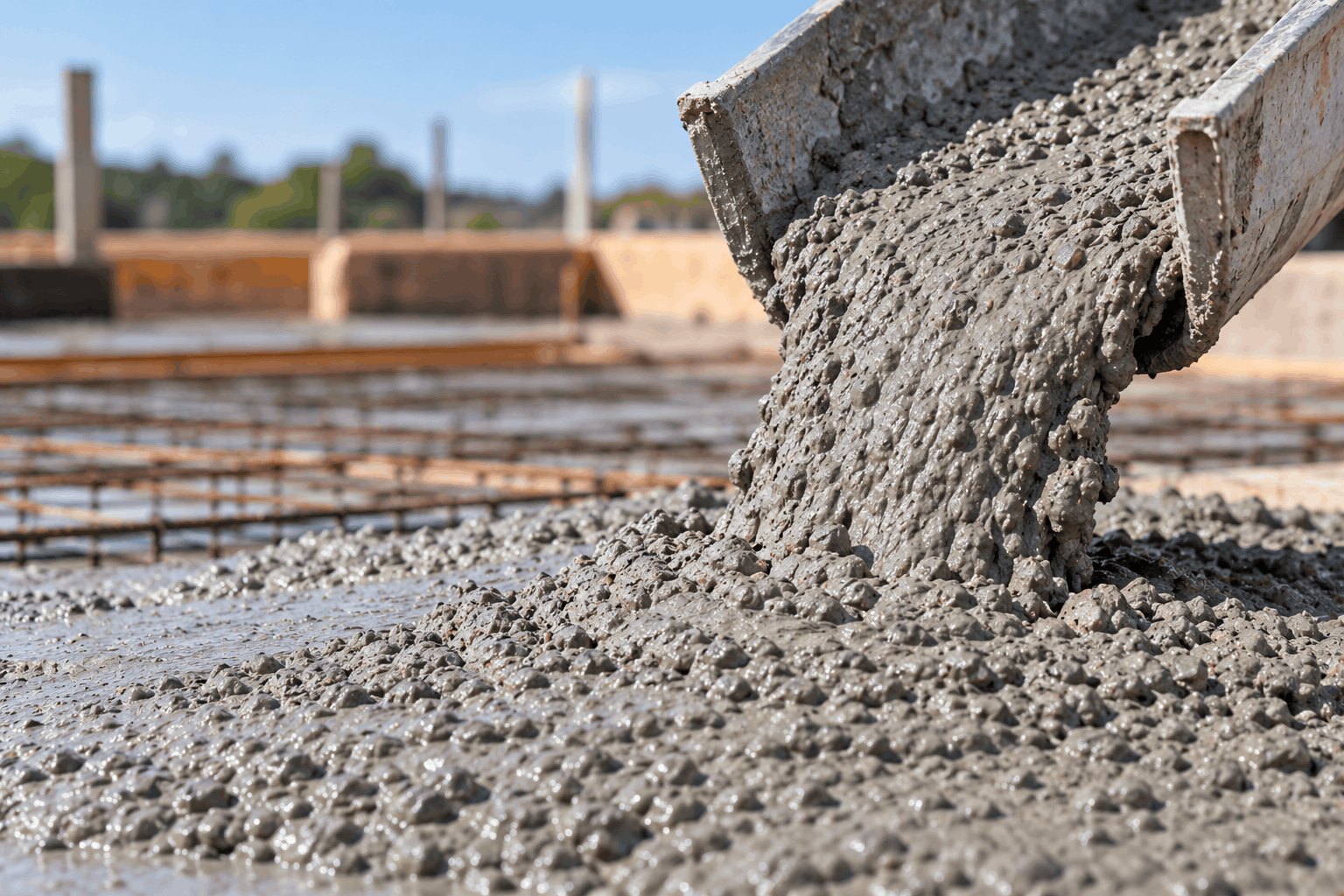
Concrete admixtures are ingredients added to a concrete mix to modify particular properties of the fresh or hardened concrete.
Depending on the type used, an admixture may help change workability, control setting time, reduce the amount of water required or provide other characteristics needed for a particular application.
Admixtures are not simply added to make concrete “better”. The appropriate type and dosage depend on what the concrete needs to achieve, how it will be placed and the conditions it will face.
Understanding the main types of concrete admixtures can make it easier to see why different projects may require different concrete specifications.
Key takeaways
- Concrete admixtures are added to modify specific properties of fresh or hardened concrete.
- Different admixtures can affect characteristics such as workability, water demand and setting time.
- The correct admixture depends on the concrete specification and project requirements, so admixtures should not be added without proper consideration of the mix design.
What are concrete admixtures?
Concrete is generally made from cementitious material, fine and coarse aggregates and water. Admixtures can be incorporated in relatively small quantities to modify particular characteristics of the mix.
There are several different types, each intended to perform a particular function.
For example, one project may require concrete that remains workable for longer, while another may need faster early strength development. In other situations, the aim may be to achieve the required workability while reducing the amount of water needed.
The admixture therefore needs to suit the required concrete performance rather than being treated as a general-purpose addition.
Why are admixtures used in concrete?
Admixtures allow certain properties of concrete to be adjusted to suit the project.
Depending on the type of admixture and concrete specification, they may be used to:
- Improve or maintain workability
- Reduce water demand
- Accelerate setting or early strength development
- Delay setting
- Modify air content
- Reduce water penetration
- Support particular placement requirements
An admixture can influence fresh concrete, hardened concrete or both.
The intended result needs to be established before the concrete is produced so that the appropriate admixture and dosage can form part of the mix specification.
What are the main types of concrete admixtures?
There are numerous admixture technologies available, but several broad categories are particularly relevant to everyday concrete construction.
These include:
- Water-reducing admixtures and plasticisers
- Superplasticisers
- Accelerating admixtures
- Retarding admixtures
- Air-entraining admixtures
- Water-resisting admixtures
These categories perform different functions and are not interchangeable.
Some projects may require more than one property to be modified, but compatibility and dosage need to be considered as part of the overall concrete mix design.
What are plasticisers in concrete?
Plasticisers are water-reducing admixtures used to improve concrete workability or achieve a required level of workability with less water.
This can be particularly useful because simply adding more water is not an appropriate way to make concrete easier to place.
Changing the water content alters the water-cement ratio and can affect strength, shrinkage and durability.
A suitable plasticiser can help improve workability without relying on uncontrolled water addition.
The amount and type required depend on the concrete specification, so plasticisers should be incorporated as part of a properly designed mix rather than added without consideration of their effect on the concrete.
What are superplasticisers?
Superplasticisers are higher-range water-reducing admixtures.
They can provide a greater increase in workability or a greater reduction in water demand than conventional plasticisers, depending on the formulation and dosage.
This can make them useful where concrete needs particular flow or placement characteristics.
However, high workability should not be confused with simply having a high water content. The purpose of a suitable admixture is to achieve the required concrete characteristics while maintaining control over the mix proportions.
The appropriate workability still depends on the application, reinforcement, formwork and placement method.
What are accelerating admixtures?
Accelerating admixtures are used when faster setting or early strength development is required.
They can be useful where construction programmes require concrete to progress more quickly, although the precise effect depends on the admixture, concrete specification and site conditions.
Faster concrete is not appropriate for every project.
Placement, compaction and finishing still need sufficient time to be completed correctly, and curing remains important after the concrete has been placed.
Where turnaround time is particularly important, AMIX also supplies high early strength concrete designed to achieve usable strength sooner than conventional concrete for suitable time-sensitive applications.
What are retarding admixtures?
Retarding admixtures delay the setting of concrete.
This can be useful where additional working time is required before the concrete begins to stiffen significantly.
Situations where setting control may be important can include larger or more complicated pours and conditions where concrete could otherwise begin setting faster than desired.
A retarder does not mean fresh concrete can be left indefinitely.
Concrete still needs to be transported, placed, compacted and finished within an appropriate period. The retarding effect should form part of the planned concrete specification and construction process.
What are air-entraining admixtures?
Air-entraining admixtures deliberately introduce a controlled system of very small air bubbles into concrete.
This is different from larger pockets of entrapped air caused by inadequate compaction.
Controlled air entrainment can improve resistance to repeated freezing and thawing in concrete exposed to suitable environmental conditions. It can also influence the workability of fresh concrete.
However, changing the air content can affect other concrete properties, including strength.
Air entrainment therefore needs to be specified and controlled appropriately rather than assumed to be beneficial for every application.
What are water-resisting admixtures?
Some admixtures are designed to reduce the movement or penetration of water through hardened concrete.
They may be considered where reducing water penetration forms part of the concrete performance requirements.
However, an admixture alone does not make every concrete structure automatically watertight.
Concrete specification, joints, cracks, workmanship, compaction and the overall design of the structure can all influence water resistance.
Where a project has specific waterproofing requirements, the complete construction and waterproofing strategy should therefore be established rather than relying on one component of the concrete mix.
Are concrete admixtures the same as additives?
The terms “admixture” and “additive” are sometimes used interchangeably in everyday conversation, but they can have different technical meanings.
Concrete admixtures generally refer to materials introduced into the concrete mix to modify its properties.
The important point when ordering concrete is not simply what an ingredient is called, but what performance is required from the finished mix.
The supplier needs to understand the application and specification so the concrete can be produced appropriately.
AMIX states that its concrete consists of cementitious material, fine and coarse aggregate, water and additives as required, with a full range of fibres or admixtures available on request.
Do all concrete mixes contain admixtures?
No. An admixture should be used where it serves a required purpose within the concrete specification.
Different projects have different requirements.
A straightforward general-purpose pour may not need the same concrete characteristics as a time-critical repair, highly workable structural pour or concrete exposed to particular environmental conditions.
AMIX supplies a range of concrete mixes from GEN1 to RC50, with mix design support available where required. Fibres and admixtures are available on request.
The concrete should therefore be selected according to the project rather than assuming that adding more ingredients automatically improves performance.
How do admixtures affect concrete workability?
Workability describes how easily fresh concrete can be handled, placed and compacted.
Certain water-reducing admixtures can improve workability without requiring the same increase in water content that would otherwise be needed to make the concrete more fluid.
This can be particularly useful where concrete needs to move around reinforcement or be placed in more demanding sections.
However, the required workability depends on the job.
Concrete that is suitable for one placement method may not be suitable for another. Workability should therefore be considered alongside the mix specification, site access, formwork, reinforcement and method of placement.
Can admixtures change concrete setting time?
Yes. Controlling setting time is one of the important uses of concrete admixtures.
Accelerators can help shorten setting or promote earlier strength development, while retarders can extend the period before the concrete sets.
This can help concrete suit different construction programmes and site conditions.
Setting time should not be considered in isolation, however.
The team on site still needs sufficient time and resources to place, compact and finish the concrete correctly. Weather, concrete temperature and other aspects of the mix can also influence how the concrete behaves.
Can admixtures improve concrete strength?
The relationship between admixtures and concrete strength depends on the type of admixture and how it changes the overall mix.
For example, water-reducing admixtures can allow a required workability to be achieved with less water. Controlling the water-cement ratio is important because excessive water can adversely affect concrete strength and durability.
However, it would be misleading to say that every admixture automatically makes concrete stronger.
Admixtures are selected to produce specific changes in performance. The overall strength still depends on the complete concrete specification, production, placement, compaction and curing.
Can admixtures make concrete easier to place?
Certain admixtures can alter the workability or flow characteristics of fresh concrete, which may make placement more practical for particular applications.
This does not remove the need for correct site preparation.
Formwork, access, reinforcement and labour should all be ready before concrete arrives. The placement and compaction method should also suit the concrete being supplied.
If a project needs particular workability, this should ideally be established when the concrete is ordered rather than attempting to alter the mix after it reaches site.
AMIX supplies ready mix concrete batched to specification and delivered ready for placement.
Should admixtures be added to concrete on site?
Admixtures should not be added casually to delivered concrete.
The type and quantity of an admixture can affect workability, setting, strength development and other characteristics. Compatibility with the cementitious materials and any other admixtures also needs to be considered.
Where an admixture is required, it is preferable for this to form part of the specified concrete mix.
Likewise, uncontrolled water should not be added simply to change workability.
If the concrete delivered to site does not appear suitable for the intended placement, the supplier should be contacted before changes are made.
What is the difference between admixtures and fibres?
Admixtures and fibres perform different roles within concrete.
Admixtures are incorporated to modify particular concrete properties, such as workability or setting behaviour.
Fibres are distributed through the concrete and can be used to improve characteristics such as crack control, depending on the fibre type and application.
One is not automatically a substitute for the other.
AMIX offers both fibres and admixtures on request, allowing the concrete specification to be selected according to the requirements of the project.
Where structural reinforcement is required, this should still follow the relevant engineering design.
When might standard concrete be suitable?
Not every construction project requires specialist concrete.
AMIX supplies standard concrete for general construction and everyday pours, including applications such as foundations, slabs and footings.
The correct option depends on factors such as loading, exposure, setting requirements and how the concrete will be placed.
Where a project has particular performance requirements, a different concrete type or an admixture may be appropriate.
For structural or engineered work, the concrete should follow the project specification rather than selecting a mix based solely on convenience.
Why concrete specification matters
Admixtures are most useful when they solve a clearly identified concrete requirement.
Choosing an accelerator simply because faster sounds better, or increasing workability without considering the placement method, can overlook other important aspects of the concrete.
Before ordering, consider:
- What the concrete is being used for
- Required strength or concrete class
- Placement and access conditions
- Required workability
- Setting or programme requirements
- Environmental exposure
- Any structural specification
This information helps ensure that the concrete and any required admixtures are appropriate for the job.
Speak to the AMIX team
AMIX supplies ready mix concrete for domestic and commercial projects across the North West, with mixes batched to order and delivered ready for use.
A full range of fibres and admixtures is available on request, alongside standard, rapid setting, fibre enhanced, foamed and waterproof concrete mixes.
If your project requires particular workability, strength or setting characteristics, speak to the AMIX team about the application and concrete specification when ordering.
Where structural or engineering requirements apply, these should be established by the relevant engineer or suitably qualified professional before the concrete is ordered.
Frequently asked questions
What are admixtures in concrete?
Concrete admixtures are materials incorporated into a concrete mix to modify particular properties of the fresh or hardened concrete. Different admixtures can affect characteristics including workability, water demand and setting time.
Why are admixtures added to concrete?
Admixtures are used when particular concrete characteristics are required. Depending on the type, they can help modify workability, reduce water demand, accelerate or retard setting, control air content or support other performance requirements.
What are the main types of concrete admixtures?
Common categories include water-reducing admixtures, plasticisers, superplasticisers, accelerators, retarders, air-entraining admixtures and water-resisting admixtures.
What does a plasticiser do in concrete?
A plasticiser is a water-reducing admixture. It can improve workability or allow the required workability to be achieved with less water, depending on the concrete specification and dosage.
What is the difference between an accelerator and a retarder?
An accelerating admixture is used to speed up setting or early strength development, while a retarding admixture delays setting to provide more working time. The appropriate option depends on the project and concrete specification.
Does AMIX supply concrete with admixtures?
Yes. AMIX states that a full range of fibres or admixtures is available on request. The appropriate concrete and any required admixtures should be selected according to the application and project specification.